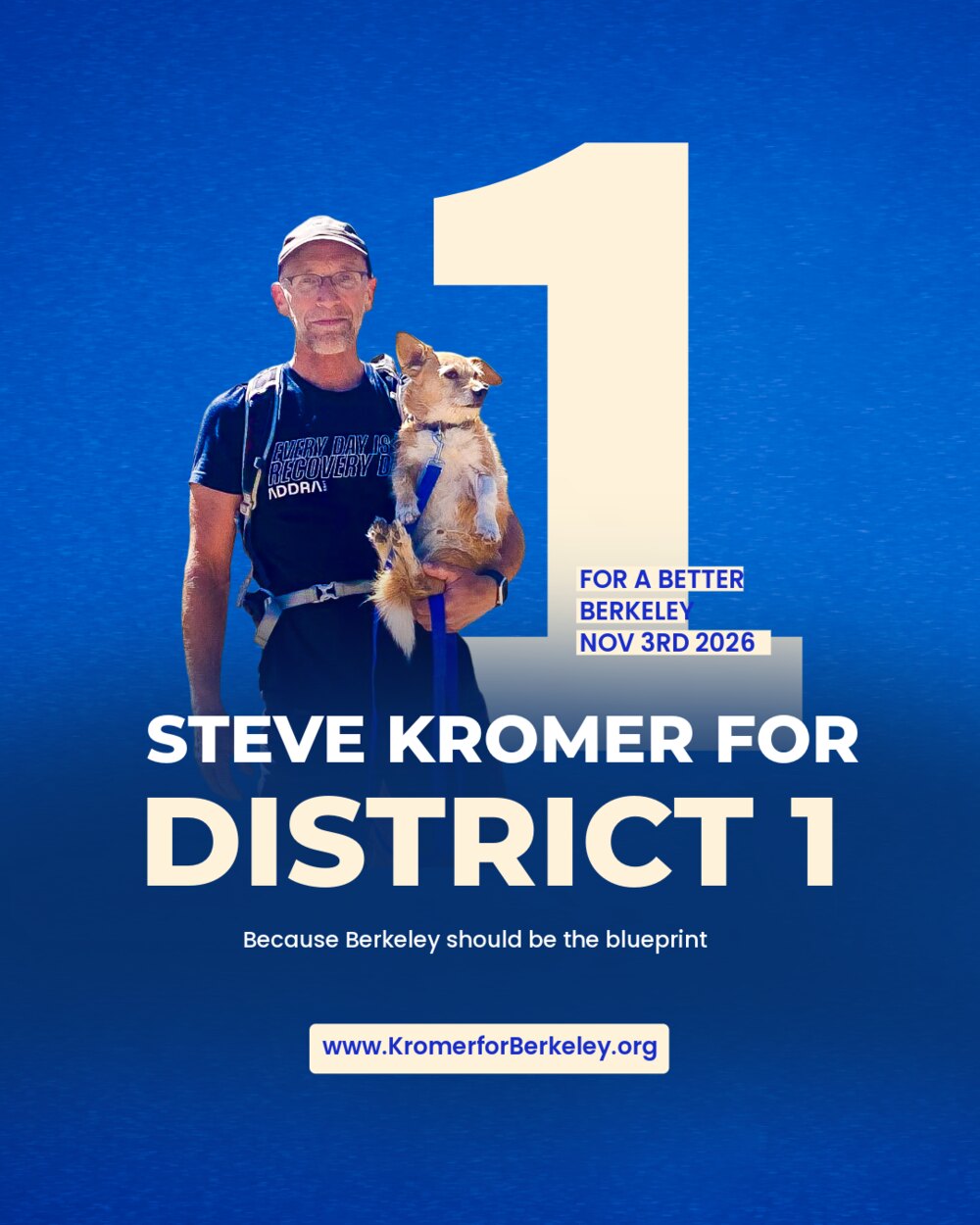
Berkeley City CouncilDistrict 1November 3, 2026
From Gilman to Fourth Street, from University Ave to Westbrae, this is the part of town that gets things done. It deserves a city government that does too — services that work, dollars spent wisely, and a Council that sticks to the job.
"Gets to work" means three things — and all three matter.
It's where Berkeley works — the Gilman maker district, Fourth Street, the University Avenue corridor up to Trader Joe's, the shops along MLK, and the tradespeople and small businesses that give District 1 its character. It's how Berkeley gets to work — North Berkeley BART, safe streets, a commute that functions. And it's a promise: in a city famous for decade-long studies, your councilmember should roll up their sleeves and deliver. Fewer meetings about the work. More of the work.
Seven things to get done — in priority order, the way you'd sequence a job, not a wish list.
Smooth streets, working lights, clean sidewalks, trash picked up, potholes filled, calls returned. The everyday things residents pay for and too often don't get. That's the job, and it comes first.
Plain-language budgets, published results, and a hard line on what we pay for versus what we get. I've spent years tracking how Berkeley spends its money — I'll bring that scrutiny to the dais and root out waste. Start here: Berkeley Budget Basics — where every tax dollar actually goes. Then see the full department breakdown: six departments, four out of every five dollars.
Faster permits, real response times, and performance you can measure — a bureaucracy that works for residents instead of the other way around. The same goes for housing: the city's job is fast, predictable permits, then let the market build — not a decade of design review.
Competent public safety and well-kept parks — Ohlone, Cedar Rose, James Kenney, Cesar Chavez. The shared spaces that make District 1 livable, maintained like we mean it.
Care for individuals, not programs without outcomes. Services measured by how many people actually get help and get indoors — run efficiently and held to results, not measured by resources deployed.
West Berkeley's working and industrial-arts economy is local jobs. I'll cut the permitting and cost friction that strangles small business — the city should help them survive, not zone them out.
The council's job is streets, safety, parks, services, and a budget that adds up — not symbolic votes on issues a city can't change. I'm a pragmatist: I'll spend our time on what City Hall actually controls.
My work is measurement and verification — building confidence in results by managing how impact actually gets measured. At Counterfactual Designs I help organizations quantify what their energy and carbon projects really deliver, and I've written a book on the judgment that good M&V demands. I brought that same discipline home to Berkeley by building the Berkeley Transparency Hub, a public tracker that turns the city's council agendas and contracts into clear, categorized records of where our money goes.
I also put in the work on the ground. I serve on the board of Berkeley Partners for Parks, volunteer in District 1's parks, and was honored with the Chris Kindness Award for community service. Parks like Ohlone, Cedar Rose, and James Kenney are where neighbors actually meet — keeping them clean and usable is exactly the kind of unglamorous, get-it-done work I want more of at City Hall. I'm running because District 1 deserves a councilmember who's measured by results, not meetings.
This isn't a one-person show or a party machine. "We" is a practical, independent coalition across District 1 — renters and homeowners, shopkeepers and tradespeople, parents and longtime neighbors. Not left or right. Just people who'd rather focus on quality of life in our neighborhoods.
37 years in Berkeley. Ready for a new challenge.
Keeps every dollar accountable and on the public record.
Endorsers will be listed here as they sign on. Want your name on the list? Join us.
A District 1 campaign is won at the door and at the drop box. Tell us how you can pitch in — knock, host, donate, or just take a sign.
Berkeley's public financing matches contributions from Berkeley residents 6 to 1, up to $60 per person. A $60 gift becomes $420 working for District 1 — which is exactly why small donors here matter more than big checks anywhere. Neighbors outside the city limits can still give up to $60; the city just doesn't match it.
The most anyone can give is $60 per person — that's the limit for publicly financed campaigns like ours. Most of our budget will come from neighbors giving what they can.
And because we'd rather you hear it from us: the match is capped at $52,000 for a council race — about 145 neighbors at $60. That's the ceiling, and we'll tell you when we hit it.
Takes about two minutes. Berkeley requires a hand-drawn signature on the receipt, so have a finger or a mouse ready.
Accountability starts with showing the receipts. Here are the official, public sources behind what we say — and the tools to take part.